• The Institute
    • About
    • Industry Protocol in Times of Genocide
    • PFP Films
    • Unprovoked Narratives
    • Provoked Narratives
    • Palestine Film Directory
    • Contact
    • Donate
    • Store
  • Palestine Film Fund
    • Grantees
    • News
    • About PFF
    • Guidelines
    • Eligibility
    • Application
    • FAQ
  • Palestine Film Platform
    • Film of the Week
    • About Season 6
    • January
    • February
  • Palestine Film Hub
    • Open Call
    • Berlinale 2026
    • Berlinale 2024
    • Sheffield 2025
    • Durban 2025
    • Durban 2024
    • Sheffield 2024
    • Sheffield 2023
    • TIFF 2024
  • The Cafe
    • Cinematic Dialogs
  • Cannes
    • Cannes 2025
    • Cannes 2024
    • Cannes 2022
    • Cannes 2021
    • Cannes 2020
  • IDFA
    • IDFA 2025
    • IDFA 2024
    • IDFA 2023
    • IDFA 2022
    • IDFA 2021
  • المؤسسة
    • اختيارات المنصة
    • إتصل بنا
    • عن المؤسسة
    • سرديات التمرد
  • صندوق الفيلم الفلسطيني
    • المستفيدين/ات
    • أخبار
    • حول صندوق الفيلم الفلسطيني
    • إرشادات للمتقدمين
    • معايير الأهلية
    • عملية التقديم
    • الأسئلة المتكررة
    • تقدم
  • منصة الفيلم الفلسطيني
    • فيلم الأسبوع
    • الموسم السادس
    • يناير
    • فبراير
  • ⁨ملتقى الفيلم الفلسطيني
    • دعوة مفتوحة
    • مهرجان برلين السينمائي الدولي ٢٠٢٦
    • بروتوكول قطاع صناعة الأفلام في زمن الإبادة
    • مهرجان كان ٢٠٢١
  • القهوة
    • نقاشات سينمائية
  • Menu

Palestine Film Institute

  • The Institute
    • About
    • Industry Protocol in Times of Genocide
    • PFP Films
    • Unprovoked Narratives
    • Provoked Narratives
    • Palestine Film Directory
    • Contact
    • Donate
    • Store
  • Palestine Film Fund
    • Grantees
    • News
    • About PFF
    • Guidelines
    • Eligibility
    • Application
    • FAQ
  • Palestine Film Platform
    • Film of the Week
    • About Season 6
    • January
    • February
  • Palestine Film Hub
    • Open Call
    • Berlinale 2026
    • Berlinale 2024
    • Sheffield 2025
    • Durban 2025
    • Durban 2024
    • Sheffield 2024
    • Sheffield 2023
    • TIFF 2024
  • The Cafe
    • Cinematic Dialogs
  • Cannes
    • Cannes 2025
    • Cannes 2024
    • Cannes 2022
    • Cannes 2021
    • Cannes 2020
  • IDFA
    • IDFA 2025
    • IDFA 2024
    • IDFA 2023
    • IDFA 2022
    • IDFA 2021
  • المؤسسة
    • اختيارات المنصة
    • إتصل بنا
    • عن المؤسسة
    • سرديات التمرد
  • صندوق الفيلم الفلسطيني
    • المستفيدين/ات
    • أخبار
    • حول صندوق الفيلم الفلسطيني
    • إرشادات للمتقدمين
    • معايير الأهلية
    • عملية التقديم
    • الأسئلة المتكررة
    • تقدم
  • منصة الفيلم الفلسطيني
    • فيلم الأسبوع
    • الموسم السادس
    • يناير
    • فبراير
  • ⁨ملتقى الفيلم الفلسطيني
    • دعوة مفتوحة
    • مهرجان برلين السينمائي الدولي ٢٠٢٦
    • بروتوكول قطاع صناعة الأفلام في زمن الإبادة
    • مهرجان كان ٢٠٢١
  • القهوة
    • نقاشات سينمائية

Film of the Week #100

March 5th - March 12th 2025

Guest curated by Batool Elhennawy, Contemporary Image Collective (Cairo)
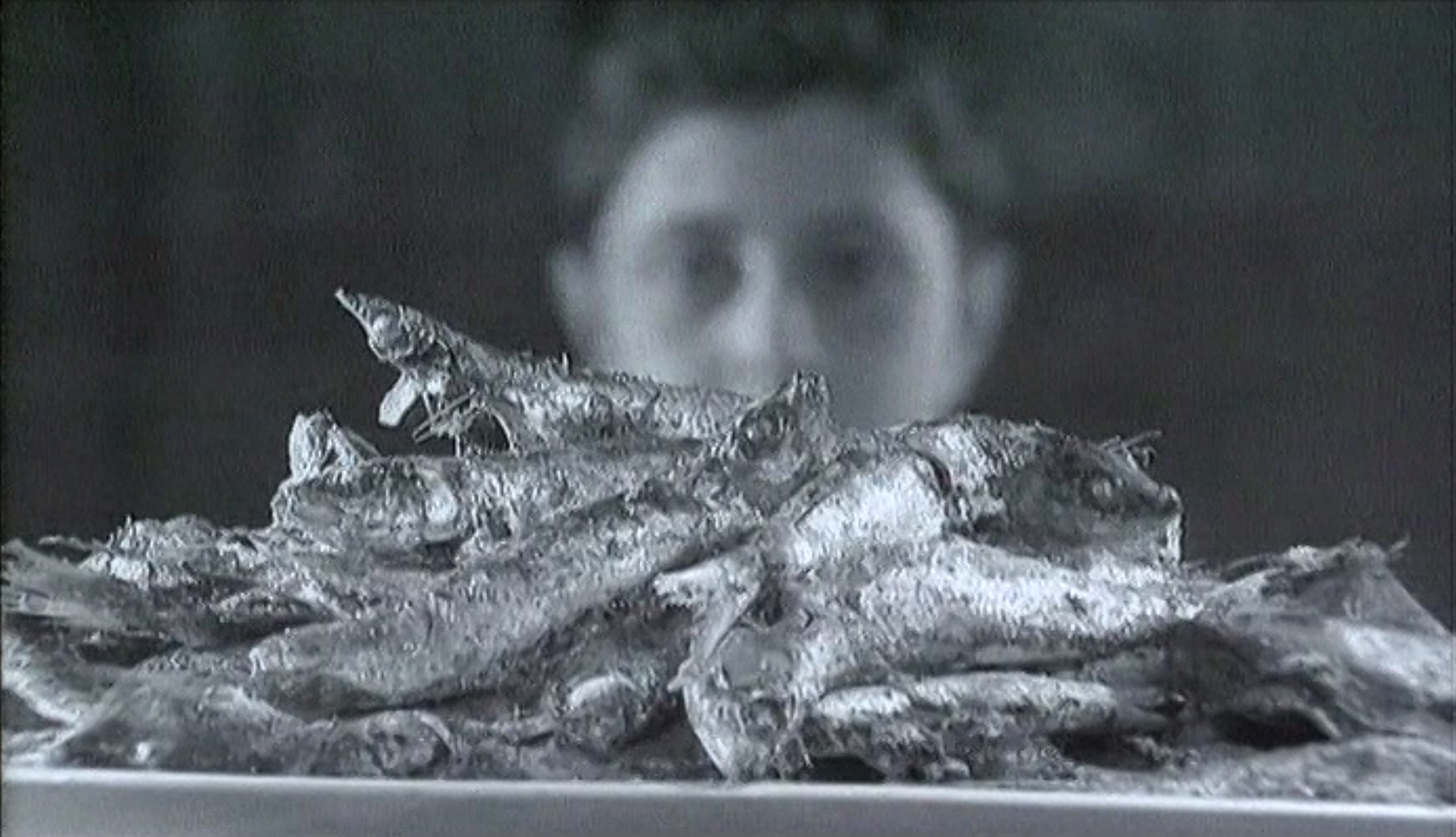
A Plate of Sardines (1997)

March 05, 2025 in Short, Documentary

Drama, 17m

In the company of fellow Syrian filmmaker Mohammad Malas, ground-breaking director Omar Amiralay revisits the ruins of the destroyed Golan village of Quneytra, occupied by Israel and then abandoned following the 1973 war. Shots of Quneytra – symbolically ransacked by the Israeli army – provides a haunting backdrop to this exploration of memory, place and politics. The director’s accomplished blending of reenactments, interviews and landscape imagery makes A Plate of Sardines an integral and striking contribution to Arab cinema.

Director: Omar Amiralay


This month, the films of the Palestine Film Platform have been guest curated by Batool Batool Elhennawy of the Contemporary Image Collective in Cairo. Between Syria, Lebanon, and Palestine, this film program thinks through the zionist/imperialist threat of a “regional war” and the ways the zionist occupation of Palestine led to an intersectional history of resistance in the region. The films work with themes of inaccessibility, in location of filming, or visual language, due to regimes in the three countries, and by extension their relationship to the occupation. In two overlapping types of oppression, the program attempts to think of the complexity of liberation, and the images of resistance. Ones that document, maneuver, or navigate a political catastrophe (both the distinctive and the ongoing: the nakba, the genocide, or ongoing crimes of the occupation). While the history and news from the region intersect, each geo-political site is different. As we delve into the filmmakers’ stories, perhaps we see how far the distinction is essential to a unified cause. The sentiments are shared, and the goal of liberation is one, but the complexities speak volumes.

The films engage in one on one relationships and conversations, from seemingly private, or at least specific, encounters. These conversations lead us to think of the tools of cinema as a form of observation, and a mediator of experience, one that can redefine or interplay with the experience itself. In a time where we pay tribute on a daily basis to the images of resistance from inside Gaza, the West Bank, and South Lebanon, as well as think of the power an image can hold to divert an oppressive narrative, to speak truth, to break the definition of zionist time. We additionally think, can these moments of agency and clarity in a political story come to us quietly, often unnoticed? The Syrian post-revolutionary context adds a distinct timeline and spatiality of resistance. While we listen to the filmmakers and their subjects on site, as they share a camera, we hope to engage in the potential that telling a historical story has to accumulate within the discourse of liberation.

Batool Elhennawy is an artist and cultural programmer. She studied painting at the Faculty of Fine Arts, Helwan University. She worked with the Cairo Institute for Arts and Sciences in Cairo and Alexandria, as well as doing research for art and culture institutions and projects. She participated in Spring Sessions residency (2017), The Lab Residency (2019) at Darat al Funun, Amman, Jordan, and Arriving Elsewhere (2019) in Wadi Rum, Jordan, PS: Communitism (2023) in Athens, where she developed and exhibited work, and co-curated After Hours residency (2020) at Darat al Funun. She is currently working as a programmer at Contemporary Image Collective (CIC). Her practice revolves around working with theory to find starting points for projects that might take on other forms, with a focus on text, and (moving) image.

Tags: Omar Amiralay
Prev / Next