August
Indigenous Cinemas in Conversation
Indigenous Cinemas in Conversation explores Indigenous cinema through both its stories and its forms, asking how Indigenous filmmakers create cinematic languages, rhythms, and ways of seeing that emerge from their own histories and relationships to land. By bringing Palestinian cinema together with Indigenous cinemas across Turtle Island and Hawai’i, the programme moves through different moments of the colonial experience, from dispossession and rupture to survival, renewal, and futurity.
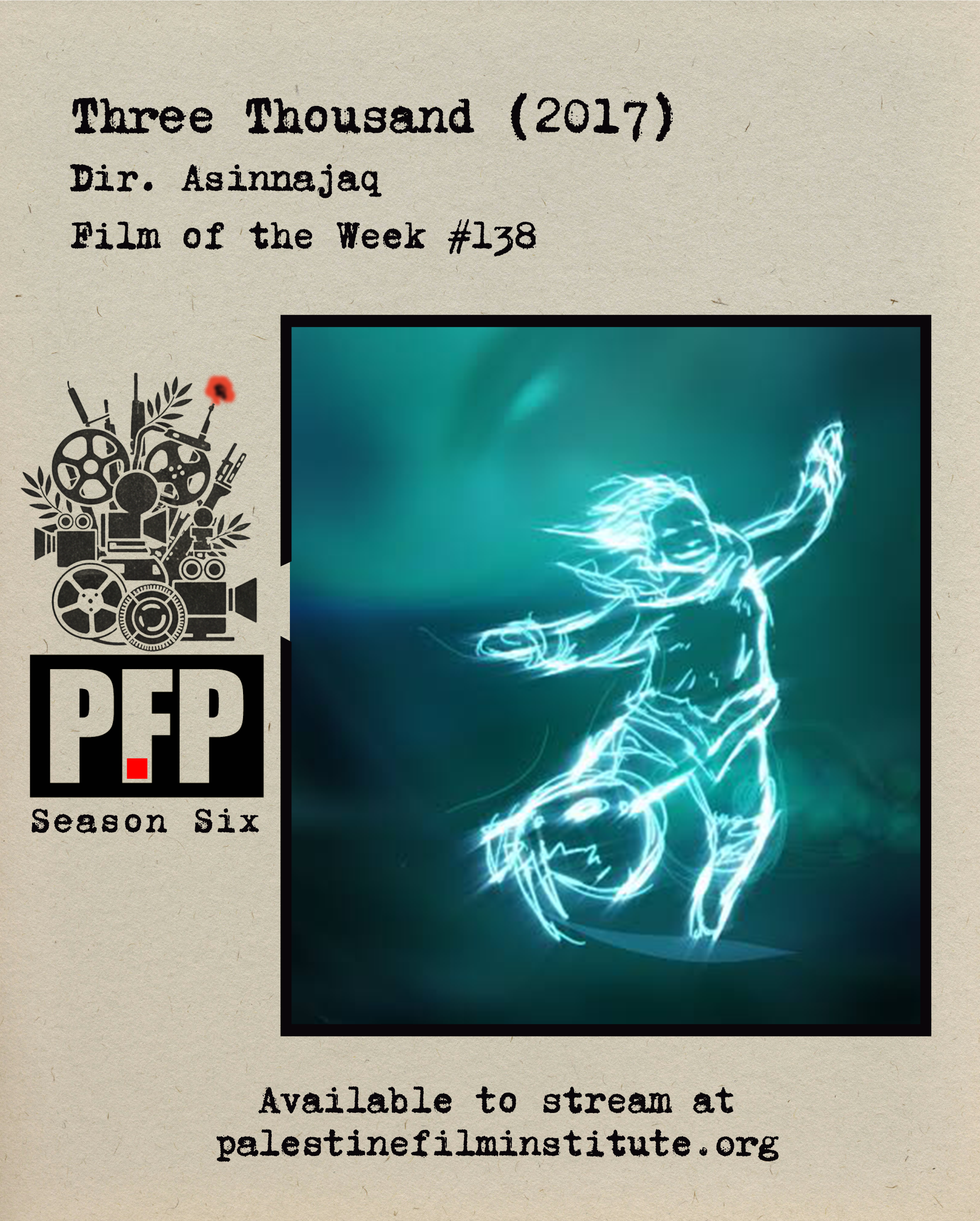
It opens with a dialogue between two short films that interrogate the politics of representation and the possibilities of reclaiming the archive. Asinnajaq's Three Thousand reworks archival images through animation to reconsider the cinematic history of Inuit representation, while Theo Panagopoulos's The Flowers Stand Silently, Witnessing unearthes colonial footage from British Mandate Palestine to interrogate its colonial gaze, asking how Indigenous filmmakers can confront, reinterpret, and reclaim images produced and withheld by colonial apparatus.
The second week shifts from the politics of the archive to the everyday experience of dispossession through Michel Khleifi's Fertile Memory, a landmark work of Palestinian cinema that traces how colonial violence reshapes memory, belonging, and daily life for Palestinians who remained after the Nakba. The third week turns to the psychological afterlives of colonialism through Christopher Kahunahana’s Waikiki, exploring alienation, fractured belonging, and the invisible ways colonial powers continue to inhabit Indigenous lives.Though separated by four decades and distinct geographies, both films blur the boundaries between documentary and fiction, reflecting storytelling traditions where lived experience, memory, and imagination remain intertwined. The boundaries between reality, memory, dreams, and imagination remain deliberately porous and expand the cinematic languages through which relationships to land, identity, and belonging can be understood.
The programme concludes with a dialogue between two animated short films, Biidaaban (The Dawn Comes) by Amanda Strong and Mariam by Dana Durr. Through stop-motion and hand-drawn animation, these films extend the programme’s exploration of storytelling beyond the conventions of colonial realism, creating worlds shaped by ancestry, spirituality, mythology, and Indigenous relationships to land. Together, they embrace animation to imagine worlds where ancestry, memory, kinship, and relationships to land remain alive, opening possibilities for Indigenous futures grounded in connection and continuity.