• The Institute
    • About
    • Industry Protocol in Times of Genocide
    • PFP Films
    • Unprovoked Narratives
    • Provoked Narratives
    • Palestine Film Directory
    • Contact
    • Donate
    • Store
  • Palestine Film Fund
    • Grantees
    • News
    • About PFF
    • Guidelines
    • Eligibility
    • Application
    • FAQ
  • Palestine Film Platform
    • Film of the Week
    • About Season 6
    • April
    • March
    • February
    • January
  • Palestine Film Hub
    • Open Call
    • CPH:DOX 2026
    • Berlinale 2026
    • Berlinale 2024
    • Sheffield 2025
    • Durban 2025
    • Durban 2024
    • Sheffield 2024
    • Sheffield 2023
    • TIFF 2024
  • The Cafe
    • Cinematic Dialogs
  • Cannes
    • Cannes 2025
    • Cannes 2024
    • Cannes 2022
    • Cannes 2021
    • Cannes 2020
  • IDFA
    • IDFA 2025
    • IDFA 2024
    • IDFA 2023
    • IDFA 2022
    • IDFA 2021
  • المؤسسة
    • اختيارات المنصة
    • إتصل بنا
    • عن المؤسسة
    • سرديات التمرد
  • صندوق الفيلم الفلسطيني
    • المستفيدين/ات
    • أخبار
    • حول صندوق الفيلم الفلسطيني
    • إرشادات للمتقدمين
    • معايير الأهلية
    • عملية التقديم
    • الأسئلة المتكررة
    • تقدم
  • منصة الفيلم الفلسطيني
    • فيلم الأسبوع
    • الموسم السادس
    • نيسان
    • مارس
    • فبراير
    • يناير
  • ⁨ملتقى الفيلم الفلسطيني
    • دعوة مفتوحة
    • مهرجان برلين السينمائي الدولي ٢٠٢٦
    • بروتوكول قطاع صناعة الأفلام في زمن الإبادة
    • مهرجان كان ٢٠٢١
  • القهوة
    • نقاشات سينمائية
  • Menu

Palestine Film Institute

  • The Institute
    • About
    • Industry Protocol in Times of Genocide
    • PFP Films
    • Unprovoked Narratives
    • Provoked Narratives
    • Palestine Film Directory
    • Contact
    • Donate
    • Store
  • Palestine Film Fund
    • Grantees
    • News
    • About PFF
    • Guidelines
    • Eligibility
    • Application
    • FAQ
  • Palestine Film Platform
    • Film of the Week
    • About Season 6
    • April
    • March
    • February
    • January
  • Palestine Film Hub
    • Open Call
    • CPH:DOX 2026
    • Berlinale 2026
    • Berlinale 2024
    • Sheffield 2025
    • Durban 2025
    • Durban 2024
    • Sheffield 2024
    • Sheffield 2023
    • TIFF 2024
  • The Cafe
    • Cinematic Dialogs
  • Cannes
    • Cannes 2025
    • Cannes 2024
    • Cannes 2022
    • Cannes 2021
    • Cannes 2020
  • IDFA
    • IDFA 2025
    • IDFA 2024
    • IDFA 2023
    • IDFA 2022
    • IDFA 2021
  • المؤسسة
    • اختيارات المنصة
    • إتصل بنا
    • عن المؤسسة
    • سرديات التمرد
  • صندوق الفيلم الفلسطيني
    • المستفيدين/ات
    • أخبار
    • حول صندوق الفيلم الفلسطيني
    • إرشادات للمتقدمين
    • معايير الأهلية
    • عملية التقديم
    • الأسئلة المتكررة
    • تقدم
  • منصة الفيلم الفلسطيني
    • فيلم الأسبوع
    • الموسم السادس
    • نيسان
    • مارس
    • فبراير
    • يناير
  • ⁨ملتقى الفيلم الفلسطيني
    • دعوة مفتوحة
    • مهرجان برلين السينمائي الدولي ٢٠٢٦
    • بروتوكول قطاع صناعة الأفلام في زمن الإبادة
    • مهرجان كان ٢٠٢١
  • القهوة
    • نقاشات سينمائية

Film of the Week #29

April 14th - 21st 2021

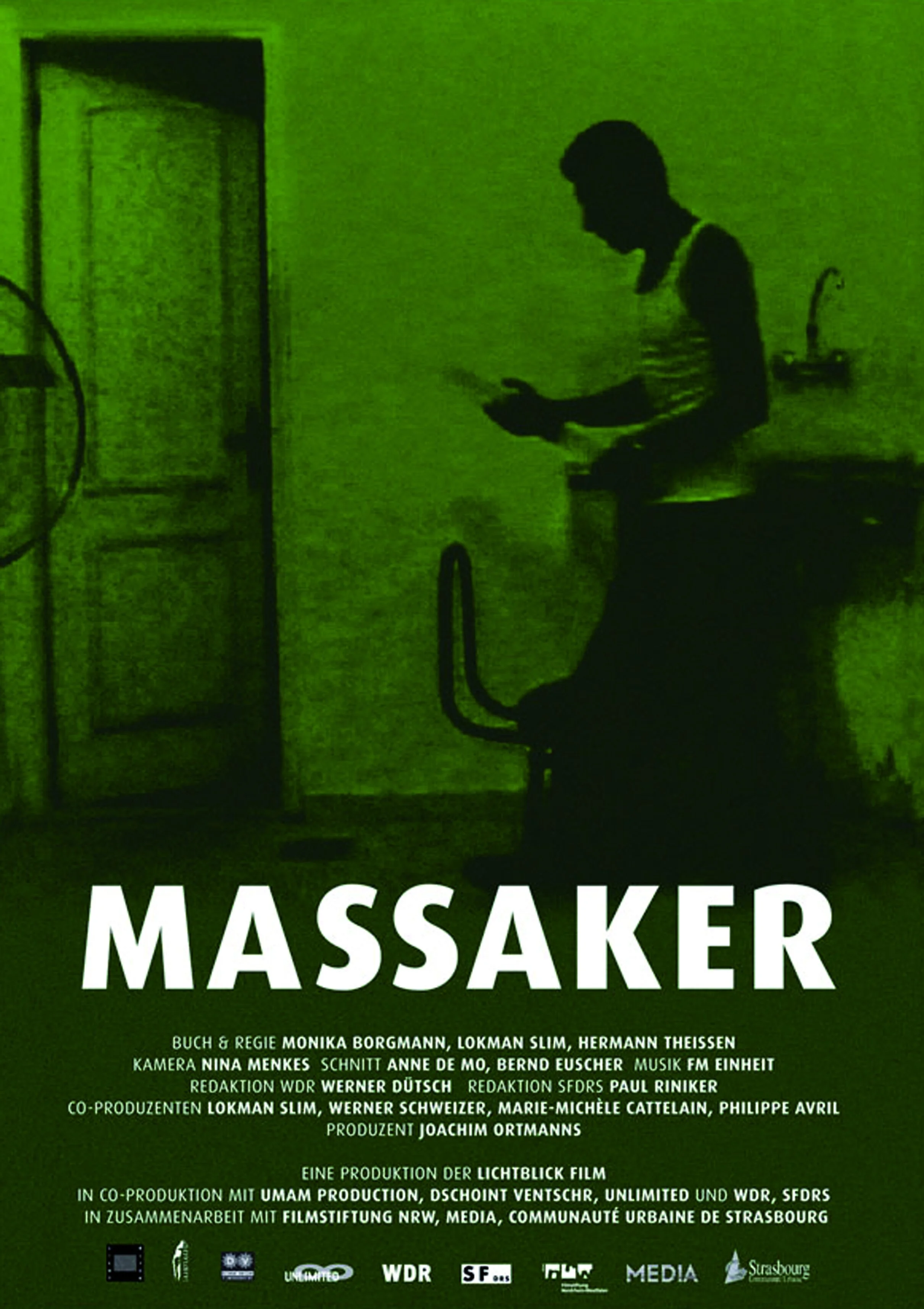
Massacre (2005)

April 14, 2021 in Feature, Documentary

In Memory of Lokman Slim


Documentary, 1h 38m


Between September 16 and 18, 1982, for two nights and three days, the killers of Sabra and Shatila went about their heinous crimes. In the end, they had murdered between 1,000 and 3,000 Palestinian civilians, predominantly women, children and old people. The precise number of victims - both those killed and those missing - is not known to this very day. The perpetrators primarily originated from the ranks of the Forces Libanaises, a Christian militia affiliated to Israel. The logistics for this massacre were provided by the Israeli Army, under the auspices of the former Minister of Defence and current Minister President, Ariel Sharon. In 1982, the massacre in the Lebanese Palestinian camps deeply shook the public throughout the world, but today it has been (almost) entirely forgotten. This is despite the fact that it is a role model for all the massacres that followed: for example that in Rwanda or those committed during the Yugoslavian wars. Again and again, the unanswered questions surface: what drives people to such excesses of brutality, and how are the perpetrators able to live on? Massaker is - both in contents and aesthetically - a psycho-political study of six perpetrators, who participated in the massacre of Sabra and Shatila both on orders and on their own personal initiative. The film intertwines the mental dispositions of the killers with their political environment and broaches the phenomenon of collective violence through their accounts.

Directors: Monica Borgmann, Lokman Slim, Hermann Theissen

Production: Joachim Ortmanns for Lichtblick Film

Editing: Anne de Mo, Bernd Euscher

Cinematography: Nina Menkes

Winner of the Fipresci Preis, Panorama, Berlinale 2005

Tags: Lokman Slim, Monika Borgmann, Hermann Theissen
Prev / Next